
07 Oct 2026
12 October, 2026
Monday
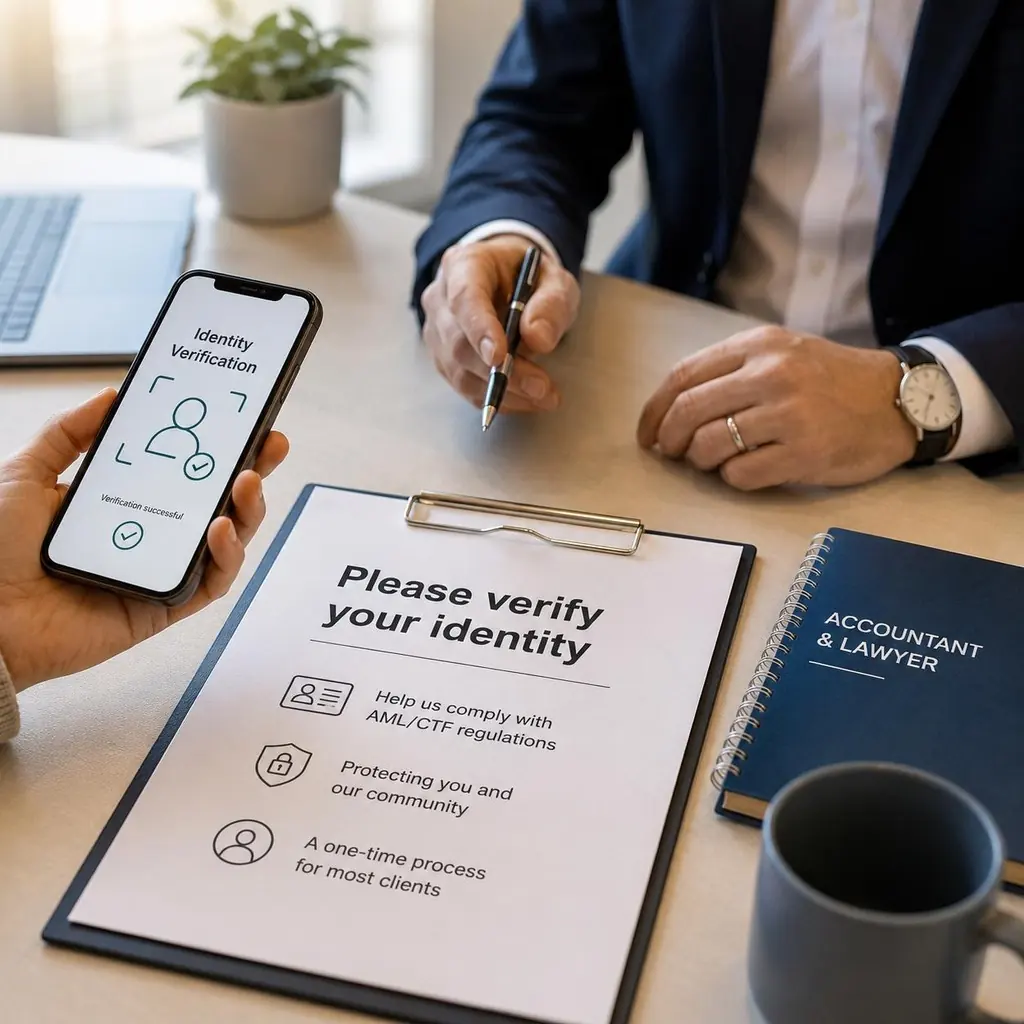
If you've recently been asked by your accountant or lawyer to provide identification before they can act on your behalf, you're certainly not alone.
For many Australians, it may seem like an unnecessary inconvenience.
After all, you've been using the same accountant for years. They know who you are, you've met them countless times, and they've handled your affairs without issue. So why the sudden request for passports, driver's licences and identity verification?
The answer lies in one of the biggest changes to Australia's Anti-Money Laundering and Counter-Terrorism Financing (AML/CTF) laws in almost two decades.
For many years, banks, payment providers and other financial institutions have operated under strict AML/CTF laws.
These organisations have long been required to verify the identity of their customers before providing services. It's something we've all become accustomed to when opening a bank account or applying for financial products.
Now those same principles are being extended to what are often referred to as "gatekeeper professions" — including accountants, lawyers, conveyancers and trust and company service providers.
These professionals regularly help establish companies, trusts, property transactions and other important legal structures. As a result, they now have similar obligations to verify the identity of the people they are acting for.
The obvious answer is to combat financial crime, but I think there's a much broader reason.
These reforms are about ensuring that people really are who they claim to be.
For many years, it has been surprisingly easy to establish companies, trusts and other legal structures without the same level of identity verification that we have come to expect when opening a bank account.
It raises an interesting question.
Most of us probably assume these checks have always existed. The reality is that, in many situations, they haven't. That's what makes these reforms such a significant change — not because they're introducing something entirely new, but because they're extending an important safeguard to professions that have traditionally relied on trust rather than formal verification.
While the overwhelming majority of transactions are completely legitimate, these reforms are designed to make ownership more transparent and accountable.
By requiring accountants, lawyers and other professionals to verify their clients, Australia is creating a stronger chain of trust. Every verified identity makes it harder for false identities, nominee arrangements and hidden ownership structures to go undetected.
The reforms should also improve transparency around company ownership and assist regulators in enforcing Australia's foreign ownership rules. When the identity of the individuals behind a transaction is properly established from the outset, regulators are in a much stronger position to understand who ultimately owns or controls Australian businesses and assets.
Ultimately, these changes are about increasing confidence in the integrity of our financial and legal systems. Whether someone is buying a business, establishing a trust or investing in property, knowing that they are genuinely who they claim to be benefits everyone.
I completely understand why some clients feel frustrated.
Imagine you've worked with the same accountant for twenty years. Suddenly you're asked to complete identity verification before they can continue helping you.
Your first reaction might be:
The reality is that these professionals aren't making up new rules.
They're complying with new legal obligations that require them to formally identify and verify their clients using documented procedures.
Fortunately, identity verification has come a long way.
Many firms now use secure online verification platforms that allow clients to verify their identity within minutes using their smartphone.
Rather than photocopying documents or attending an office in person, many verification systems can securely confirm your identity using encrypted digital technology.
While it might seem like an extra step today, it is generally faster, more secure and more reliable than traditional paper-based identification processes.
When I recently received a request from my accountant to complete identity verification under the new AML requirements, my reaction was probably different to many people.
It didn't surprise me.
Having spent many years working within the financial services industry, identity verification has simply become part of everyday business. Opening accounts, onboarding clients and verifying who people are has long been considered a fundamental responsibility.
What did strike me, however, was that many Australians will now be encountering these requirements for the very first time.
If you've never worked in banking, payments or financial services, being asked to upload your driver's licence or passport by an accountant or lawyer can understandably feel unusual. Your first thought might even be:
The answer is simple. They don't suddenly need to know who you are — they're now legally required to formally verify it.
In many ways, I see these reforms as Australia catching up. The financial sector has operated this way for years, and extending these requirements to other professions involved in company formation, trusts and property transactions seems like a logical next step.
Whenever governments introduce new compliance requirements, there is always concern about additional paperwork.
Some of that concern is understandable.
No one enjoys having to provide identification for something they've been doing for years.
However, I believe these reforms are ultimately about improving transparency and trust across Australia's financial and legal systems.
Most clients will only need to complete the verification process once.
If that small amount of inconvenience helps ensure that businesses are owned by genuine people, property transactions are more transparent, and Australia's foreign ownership laws can be more effectively enforced, then I believe it's a worthwhile step forward.
As our world becomes increasingly digital and interconnected, being able to confidently verify who people are is becoming more important than ever. These reforms are another step towards building a financial and legal system that Australians can have greater confidence in.
As these reforms continue rolling out, don't be surprised if more professional service providers ask you to verify your identity.
Rather than seeing it as unnecessary bureaucracy, consider it another layer of protection designed to make Australia's financial system more transparent and trustworthy.
Identity verification isn't about creating obstacles for honest people. It's about ensuring that the people establishing companies, purchasing businesses, creating trusts and investing in Australia are genuinely who they claim to be.
Sometimes the most effective reforms are the ones that quietly strengthen the integrity of the system without dramatically changing how we go about our lives.
And if your accountant or lawyer asks to see your driver's licence next time you meet, it's probably not because they've forgotten who you are — it's because Australia is taking another important step towards a more transparent and accountable future.