07 Oct 2026
12 October, 2026
Monday
The list has dropped.
Record Store Day has revealed its latest Black Friday releases, which means vinyl collectors around the world are doing exactly what I am doing: scrolling through the list, spotting things we absolutely don't need, and immediately deciding which ones we absolutely must have.
For anyone who wants to join me in this particular form of financial irresponsibility, you can browse the .
For most people, Record Store Day probably looks like a slightly strange event where people queue outside record shops to buy music that, in many cases, they could listen to instantly on Spotify or Apple Music without leaving the house.
And when you put it like that, perhaps it is a little strange.
But I've always loved Record Store Day because it's about much more than simply buying music. It's the hunt, the discovery, the limited releases, the beautiful pressings and the possibility of finding something from an artist you love that you didn't even know existed.
More importantly, it's about physically owning music.
In an age when almost everything is instantly available, Record Store Day somehow manages to make music feel like an event again.
One of the things I love most about Record Store Day is something that probably isn't particularly obvious to the general public.
It has created a market for recordings that, in another era, might simply have remained sitting in a record company's vault.
Think about an obscure live recording from a major artist. Perhaps somebody recorded a concert in 1978, or there are alternate versions of songs, demos, radio sessions or tracks that didn't make an album. The recording might be fantastic, but historically a record company still had to ask a fairly basic commercial question: How many people are actually going to buy this?
If you're trying to justify a major worldwide album release, selling 10,000 copies isn't particularly exciting. It isn't going to sell a million copies or become the next blockbuster album.
Record Store Day changes the equation.
You don't need a million people to want that obscure live recording. You might only need 5,000, 10,000 or 15,000 serious fans scattered around the world who would love to own something from their favourite artist that they haven't heard before.
Press 10,000 copies, distribute them through independent record stores around the world and suddenly something that might not have been commercially attractive as a mainstream release becomes a viable product.
And those numbers become much more interesting when you multiply them across a record company's catalogue.
One obscure recording selling 10,000 copies might not sound particularly significant. But what if you can do it with ten artists? Twenty? Fifty?
Record companies are sitting on decades of recordings from artists with established fan bases, and some of those fans aren't looking for another copy of the greatest hits.
We want the weird stuff.
We want the concert that was recorded but never released. The abandoned album. The demos. The alternate mixes. The radio session. The soundtrack that disappeared. The promotional recording that was never commercially available. The album that was only released in one country. The recording somebody at the label decided forty years ago wasn't commercially viable.
Record Store Day gives some of that material another chance.
There's also something clever about the limited numbers. An obscure live album might struggle if a record company pressed 100,000 copies and expected them to sit in stores indefinitely. Pressing 10,000 copies for a worldwide community of collectors is a completely different proposition.
The financial risk is smaller, scarcity becomes part of the attraction and the release itself becomes an event.
For the record companies, those enormous back catalogues can generate new revenue. For artists and their estates, it can provide an opportunity to release recordings that were never considered commercially important enough the first time around.
And for collectors like me, that's where Record Store Day becomes dangerous.
Because I'm not necessarily looking for another copy of an album I already own.
I'm looking for the thing I didn't know existed.
Of course, every Record Store Day list has that one release.
The one you spot immediately. The one that changes casually visiting your local record store into something resembling a military operation.
For me this time, it's Prince.
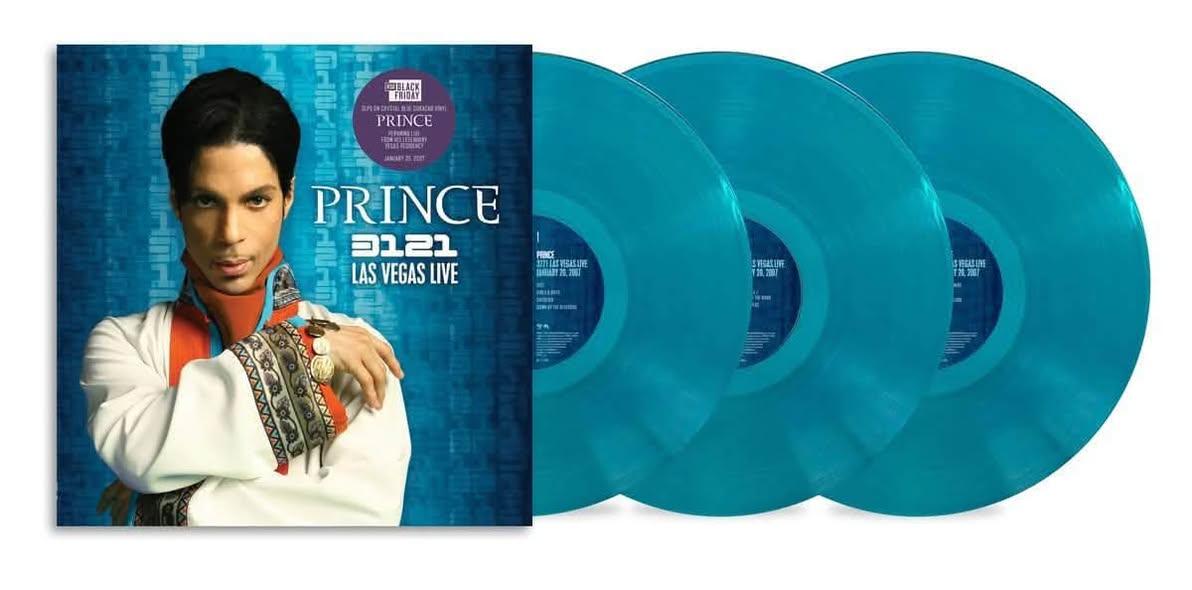
3121 Las Vegas Live captures Prince performing during his Per4ming Live @ 3121 Las Vegas residency. It's a three-record set and exactly the kind of archival release that makes Record Store Day so interesting to me.
And with reports of only around 9,400 copies being pressed, there is going to be one major fight at the record store for this one.
I'm planning to be in that fight.
But there's another reason this particular release has Prince fans interested.
There is a belief among fans that the Prince Estate may be starting to turn its attention towards the 3121 era and that this could be a taste of something much bigger to come.
The dream is a Super Deluxe Edition of 3121.
Anyone who knows Prince knows about the Vault. He was extraordinarily prolific and recorded far more music than appeared on his official albums. Some of the unreleased tracks from the 3121 period that have become known among collectors are brilliant recordings in their own right, even though they didn't make the finished album.
A proper Super Deluxe treatment could potentially open that period up, with unreleased Vault recordings alongside live performances and other material from the era.
Whether this Record Store Day release really is the Prince Estate teasing fans about something much bigger remains to be seen.
But if they're teasing us, it's working.
I want this one.
Not every Record Store Day release contains some long-lost recording discovered in a vault.
Plenty of them are albums and singles we've heard before. Sometimes they're records that have been available for decades.
So why would you buy them again?
Sometimes the answer is simply because the record itself is beautiful.
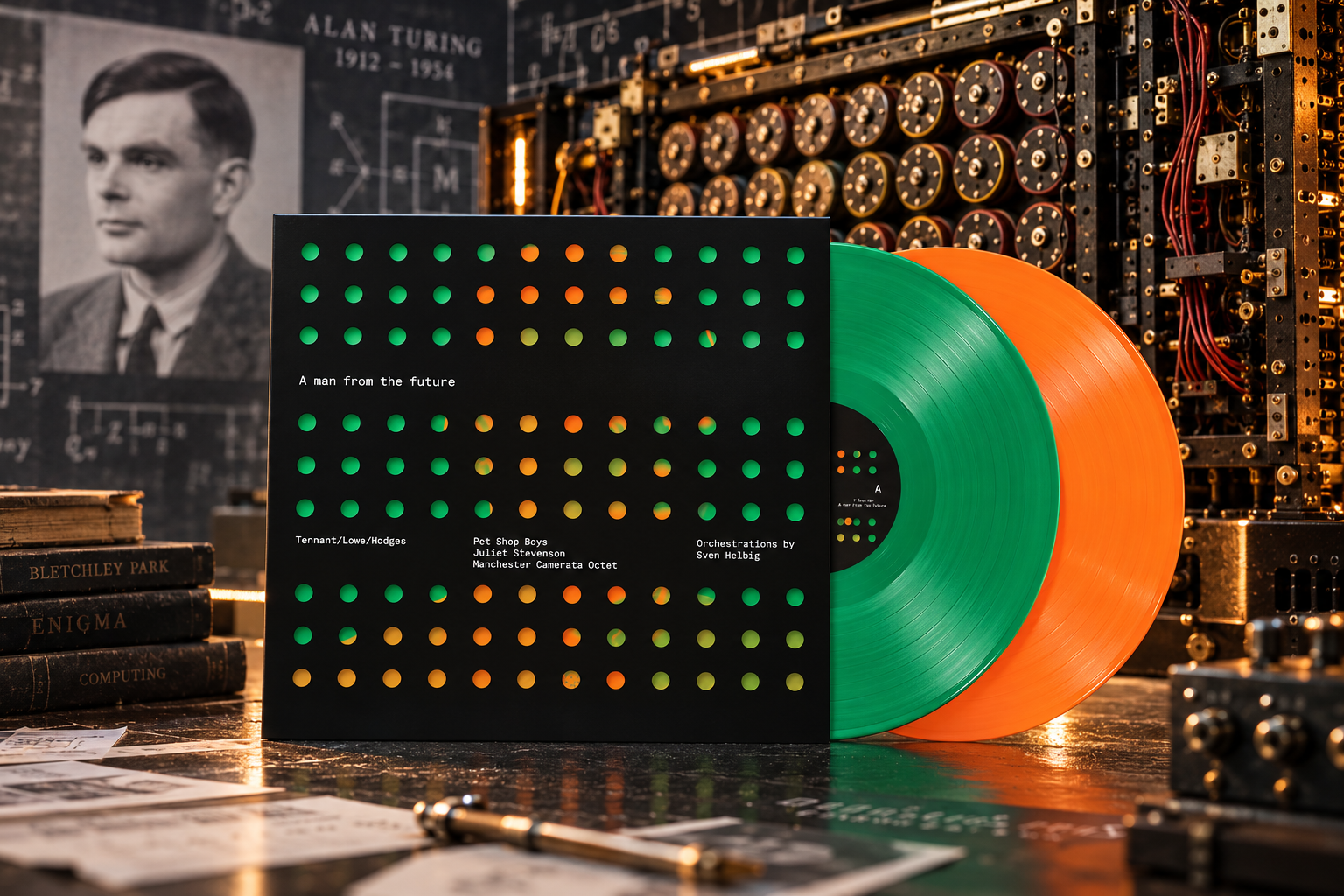
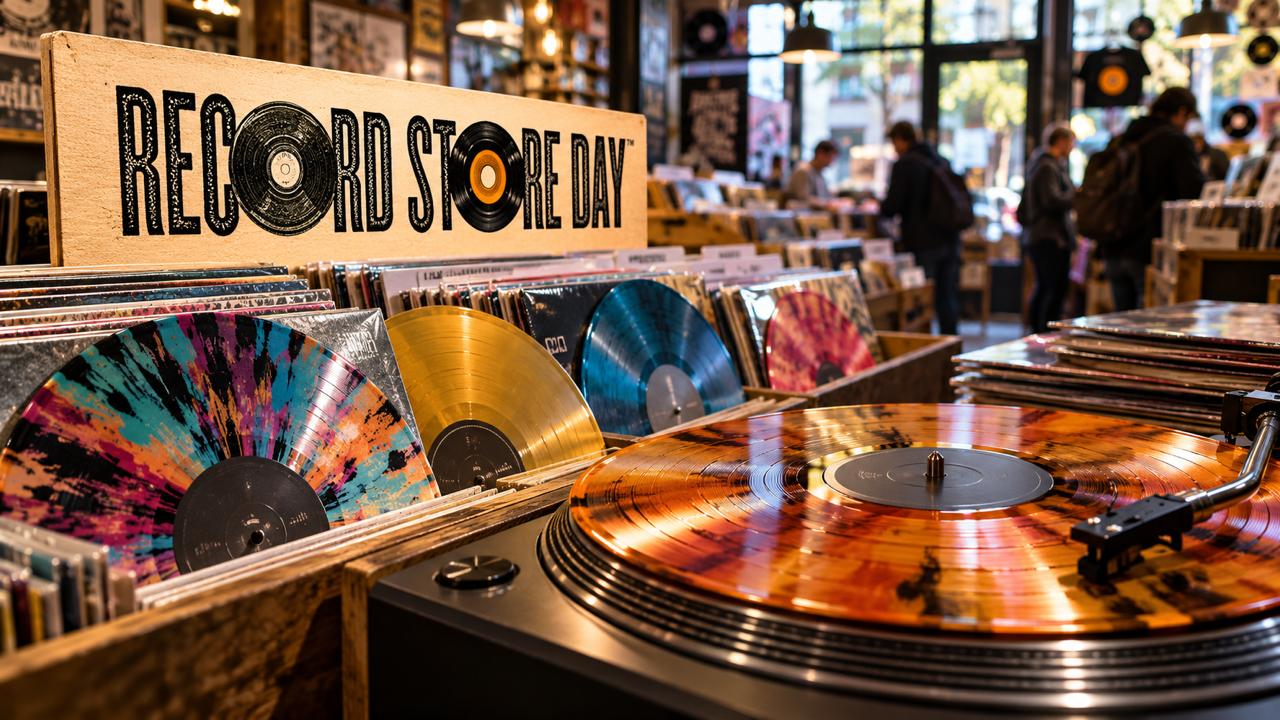
Record Store Day has become known for unusual coloured vinyl, picture discs, splatter pressings, unusual packaging and other limited editions that turn a familiar album into something completely different.
Some look impressive sitting in their sleeve. Others don't really reveal what makes them special until you put them on the turntable.
Coloured and patterned vinyl can look completely different once it's spinning. Designs merge together, colours move across the platter and something that was originally just a way of storing music becomes a moving piece of artwork.
I bought a wonderful example during the main Record Store Day in April.
It was a special reissue of Peter Gabriel's Sledgehammer.
I certainly didn't buy it because I'd never heard Sledgehammer before. The song has been around since the 1980s and its extraordinary music video is almost as famous as the song itself.
I bought it because of the record.
The vinyl incorporates imagery from the original Sledgehammer video, and when you put it on the turntable and watch it spinning, the effect is fantastic.
I filmed my copy playing because a photograph really doesn't capture what makes it special.
Streaming can give me Sledgehammer instantly. In terms of convenience, there's absolutely no competition.
But streaming can't give me that.
And I think that's another part of understanding why Record Store Day works.
Record companies aren't always selling collectors music we don't already have. Sometimes they're finding creative ways of making us want to own the music again in a completely different physical form.
And yes, collectors are perfectly aware of what's happening.
We buy them anyway.
Of course, there's an obvious question hanging over all of this.
Why bother?
Almost everything I listen to is available instantly through streaming. I can carry thousands of albums around in my pocket, think of almost any song and be listening to it seconds later.
As a way of accessing music, streaming is extraordinary. I use it all the time.
But there's something it can't give me.
It can't give me the feeling of actually owning the album.
There's something very different about physically holding a record made by an artist you love. It's difficult to explain without sounding overly sentimental, but to me it feels like you're somehow one step closer to the artist.
You're holding something they created. Something tangible. A little piece of them and a particular moment in their career.
Then there's the ritual of actually playing it.
You take the record out of its sleeve, place it on the turntable and lower the stylus. If it's a gatefold album, you open it while the record is playing and start looking through the photographs, artwork and liner notes.
You read who played on the record. Who produced it. Where it was recorded. You discover photographs you've perhaps never seen before.
And then you find the lyrics.
That's when you discover that the line you've confidently been singing for the past twenty years bears absolutely no resemblance to what the artist actually sang.
We've all done it.
You read the actual lyrics and suddenly realise you've been singing the musical equivalent of a five-year-old making up words because they vaguely sound like what they're hearing.
And somehow even that becomes part of the experience.
Streaming reduced accessing an album to something incredibly convenient: tap a screen and the music starts. I'm certainly not against that.
But a record asks you to spend some time with it.
You hold it. You look at it. You turn it over. You read it. You discover things about it. You put Side A on, and when it finishes you physically get up and turn it over to hear Side B.
For forty or fifty minutes, you're not just accessing a collection of songs.
You're spending time with an album.
There's another part of owning records that I notice whenever people come to my house.
They love flipping through the collection.
There's something wonderfully revealing about watching someone browse your records. They'll pull something out and laugh because they'd completely forgotten the album existed.
Then they'll find something else and look at me in complete surprise.
"You listen to this?"
That's part of the fun.
My collection isn't one genre, one decade or necessarily what somebody might expect me to listen to. There are the obvious records, but there are also obscure albums, strange discoveries, forgotten titles and things I've picked up simply because something about them interested me.
Every now and then someone pulls out an album and suddenly there's a story attached to it.
I bought that when...
I saw them live...
You have to hear this track...
You don't really get that with streaming.
I could hand someone my phone and let them scroll through my music library, but it isn't the same. Nobody comes to your house, pours themselves a drink and spends half an hour excitedly scrolling through your streaming history.
A physical record collection sits there in the room.
People can see it, touch it and explore it. In a strange way, they can learn something about you from it.
Perhaps that's another reason I've never stopped loving physical music. A record collection isn't simply a collection of music.
It's a collection of memories, tastes, discoveries and occasionally some fairly questionable purchasing decisions.
There is another side of Record Store Day that people who haven't experienced it may not realise.
Seeing something on the official list doesn't mean you'll simply be able to walk into your local record store and buy it.
The record stores themselves don't necessarily know exactly what they're going to receive.
They put in their requests. They tell their distributors which releases they want and how many copies they'd like. Then, particularly with the highly sought-after titles, they have to wait and hope.
I've talked with managers at record stores about this and heard variations of the same story.
"We tried so hard to get that release, but we ended up with none."
That's extraordinary when you think about it.
A store can know that its customers desperately want a particular record. The manager can request copies of it. Customers can be asking about it for weeks.
And the store can still end up with zero.
Other times, the store gets the release but receives far fewer copies than it wanted.
That's when things get interesting.
A store might have one, two or three copies of a record that dozens of people want. The doors open, the first customers walk in and the entire allocation can disappear almost immediately.
Sometimes we're talking seconds.
Ten seconds after opening, it's gone.
Suddenly the worldwide pressing number starts to look very different.
Take my Prince record. Around 9,400 copies worldwide might initially sound like quite a lot.
But how many are coming to Australia?
How many of those are coming to Sydney?
How many participating Sydney stores will receive it?
And how many copies will each of those stores actually get?
Nine thousand four hundred can suddenly start feeling like a very small number.
This scarcity is also connected to something fundamental about Record Store Day.
The event exists to support independent record stores.
The special releases aren't intended to simply appear online at the beginning of the event so everybody can sit at home refreshing a website. For the initial sales period, the emphasis is on selling the releases physically through participating record stores, with remaining stock able to move online afterwards under the event's rules.
That changes the whole experience.
You have to get up.
You have to go to the record store.
You might have to queue.
And you might have to get there considerably earlier than you would normally consider reasonable on a Saturday morning.
Then something interesting happens once you're through the door.
You've gone there looking for one record, but while you're inside you start flipping through everything else.
There's another Record Store Day release you hadn't noticed on the list.
Then you wander through the regular racks.
There's an album you've been looking for.
There's another one with an interesting cover.
And suddenly the person who got out of bed to buy one record is standing at the counter holding four.
I may have some experience with this.
This is where I think the whole Record Store Day model becomes particularly clever.
For many of the popular releases, the stock sells out on the day.
The record company has manufactured a known, limited quantity of a product and potentially sold virtually all of it.
The artist, or their estate, has generated new revenue from a recording or catalogue that may be decades old.
The independent record store gets customers physically through the door, many of whom will buy other things while they're there.
And the collector walks away carrying something unusual from an artist they love.
Artist. Record company. Record store. Collector.
There's potentially a win for everyone.
It's particularly clever when you return to those obscure releases sitting in record company vaults.
That live recording might never sell a million copies.
It doesn't have to.
If there are 10,000 people around the world who desperately want it, perhaps that's enough.
Do that across dozens of artists and decades of back catalogue and suddenly all those recordings sitting quietly in the vault start looking commercially interesting again.
Of course, there is one person who doesn't necessarily win.
The collector who has been standing in the queue only to discover that the three copies of the record they desperately wanted disappeared before they reached the front.
Which brings me back to Prince.
When I look at 3121 Las Vegas Live and hear a number like 9,400 copies worldwide, I'm not thinking:
"That's quite a lot of records."
I'm thinking:
"How many of them are coming to Sydney, and exactly how early do I need to get out of bed?"
Technology has made music more accessible than at any point in history.
That's wonderful.
I wouldn't want to give up streaming. I love being able to think of a song and hear it seconds later. I love discovering an artist and immediately having access to decades of their music.
But accessibility has also removed some of the anticipation that once surrounded music.
We don't necessarily have to search for something anymore. We type its name into a box and press play.
Record Store Day temporarily brings some of that hunt back.
It gives record companies an excuse to open their vaults. It gives artists and estates an opportunity to release something unusual. It gives designers an excuse to create something beautiful. It gives independent record stores a day when people actually queue outside their doors.
And it gives people like me an excuse to buy yet another record.
Not because it's the easiest way to hear the music.
Not because I couldn't stream it instead.
But because sometimes I want music to be more than something coming through my speakers.
Sometimes I want to discover it.
Sometimes I want to hunt for it.
Sometimes I want to hold it.
And sometimes I just want to put a ridiculously beautiful record on the turntable, watch it spin and think:
I'm glad I own that.