07 Oct 2026
12 October, 2026
Monday
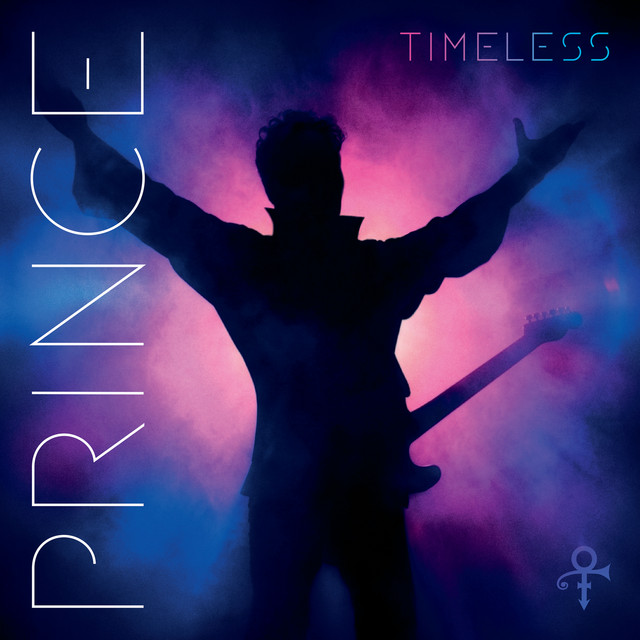
Prince's vault has become almost as legendary as the music he released during his lifetime. Timeless is particularly interesting to me because rather than simply assembling another collection of unreleased recordings, the Prince Estate has carefully curated previously unheard tracks recorded at different points throughout his career and presented them chronologically.
Having listened to the album, I think that approach works remarkably well. The individual tracks complement each other and, despite coming from different periods, somehow come together to create something that feels like a complete album rather than a collection of leftovers.
Of course, it doesn't have quite the same feeling as a Prince album conceived, recorded and carefully assembled by Prince himself. It couldn't. But it does give us a complete body of music to sit down and listen to, and perhaps most importantly, something genuinely new to discover.
Prince was once asked during a television interview whether he would ever release everything stored in his famous vault. His response was essentially that he doubted he would release it all during his lifetime. Now, years after his death, there is something fascinating about watching the pieces of that enormous musical puzzle gradually being put together. Done carefully, releases like Timeless allow us to hear parts of Prince's musical story that he never had the opportunity to share publicly himself.
One of the tracks I've particularly enjoyed is "I Am You", recorded early in his career. To my ears, there's something about it that sounds almost like Prince paying tribute to disco icon Sylvester. It's fascinating hearing such a young Prince experimenting with sounds and influences while the artist we would eventually know was still taking shape.
Then there's "Calabama", which is just damn funky. There are elements of it that sound strangely familiar to me, and I could swear I've heard Prince weave parts of this unreleased song into his live performances over the years. Whether I'm remembering a particular performance or simply recognising musical ideas Prince returned to elsewhere, it gives the track that wonderful feeling of hearing something completely new that somehow already feels familiar.
Calabama also caused a minor controversy shortly after Timeless was released when it emerged that the horn parts on the album version had actually been recorded in 2026. Initially, I can understand why that concerned some Prince fans. If we're being given music from the vault, there is a reasonable expectation that we're hearing what Prince actually left behind.
But the subsequent explanation gives the decision considerably more context. During the bridge, Prince can be heard calling for "horns", while the original multitrack contains Prince playing the intended horn line on a synthesiser. The Estate brought Greg Boyer, Adrian Crutchfield and Lynn Grissett into the studio to overdub that line with real trombone, saxophone and trumpet. These weren't musicians with no connection to Prince. They had worked with him and were part of his musical world during the later years of his life.
For me, that distinction matters. They weren't being asked to invent a new horn arrangement for Prince after his death. They were essentially taking a horn line Prince had already played himself on a keyboard and reproducing it with the real instruments he appears to have intended.
I also had the pleasure of meeting some of these musicians years ago at a meet and greet at the Sydney Opera House, which gives this particular story a slightly more personal connection for me. These were musicians Prince trusted and chose to have beside him during the later years of his career, and I believe they were the right people to be asked to complete those parts.
We can never know with certainty whether Prince would ultimately have made exactly the same decision, and I think the Estate should always be transparent whenever anything is added to a vault recording. But in this case, knowing the circumstances, hearing that Prince had already mapped out the horn parts himself, and knowing the musicians chosen to perform them, I'm comfortable with the decision. If those keyboard horns were ultimately intended to become real horns, it's difficult to imagine a more appropriate group of musicians to finish the job.
That's probably what interests me most about Timeless. It isn't a new Prince album in the conventional sense, and I don't think it should be treated as though it were. It is something slightly different: an attempt to take music scattered across an extraordinary archive and carefully assemble it into something we can experience as an album.
There will always be questions about how Prince's vault should be handled and how far anyone should go in completing work he left behind. But if the Estate continues to approach the archive with care, transparency and respect for the musicians Prince surrounded himself with, there is still an extraordinary amount of his musical story left for us to discover.
For me, Timeless is another piece of that puzzle, carefully assembled from a musical archive we're still discovering ten years after he left us.