07 Oct 2026
12 October, 2026
Monday
Over the past few years, it has been almost impossible to avoid conversations about Artificial Intelligence. Depending on who you listen to, AI is either going to revolutionise the world or replace millions of jobs. Every day there seems to be another headline predicting a future where computers do everything and humans are left wondering where they fit in.
As I listen to these conversations, I can't help but think we've been here before.
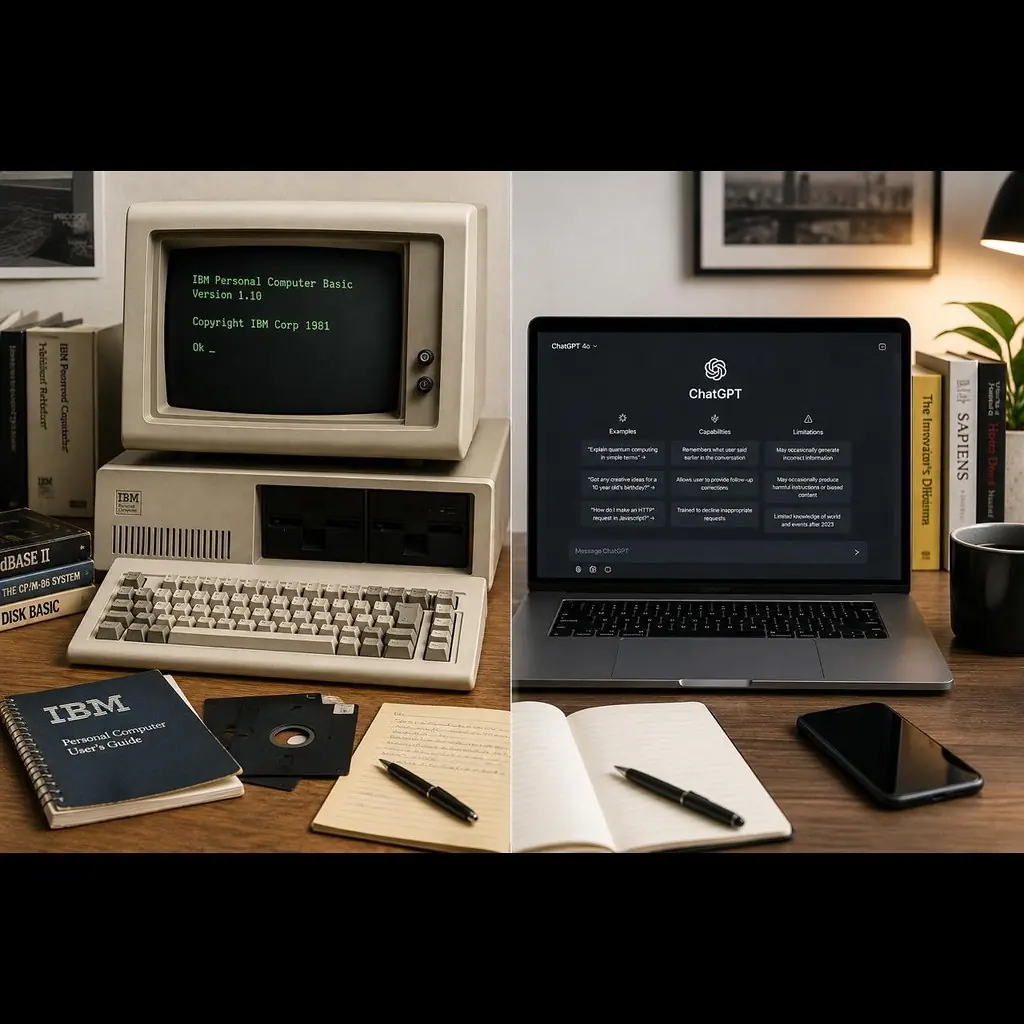
Long before anyone had heard of ChatGPT, machine learning or generative AI, there was another technological revolution that sparked remarkably similar debates—the arrival of the personal computer.
When computers first began appearing in homes and workplaces during the 1980s, many people feared they would replace jobs, make existing skills obsolete and fundamentally change the way businesses operated. In many respects they were right. Secretarial pools became smaller, manual bookkeeping was computerised and filing cabinets gradually gave way to databases.
But that was only one side of the story.
Computers also created careers that nobody had imagined only a few years earlier. Software developers, network engineers, database administrators, web designers and cybersecurity specialists all emerged because of a technology that many people initially feared. Looking back today, it's difficult to imagine modern life without computers, yet at the time there were genuine concerns about what they would mean for society.
Today, I find myself wondering whether we'll be saying exactly the same thing about Artificial Intelligence twenty years from now.
One of the things I've learnt from watching technology evolve over the years is that every major breakthrough seems to follow the same pattern.
First comes uncertainty.
Then resistance.
Eventually acceptance.
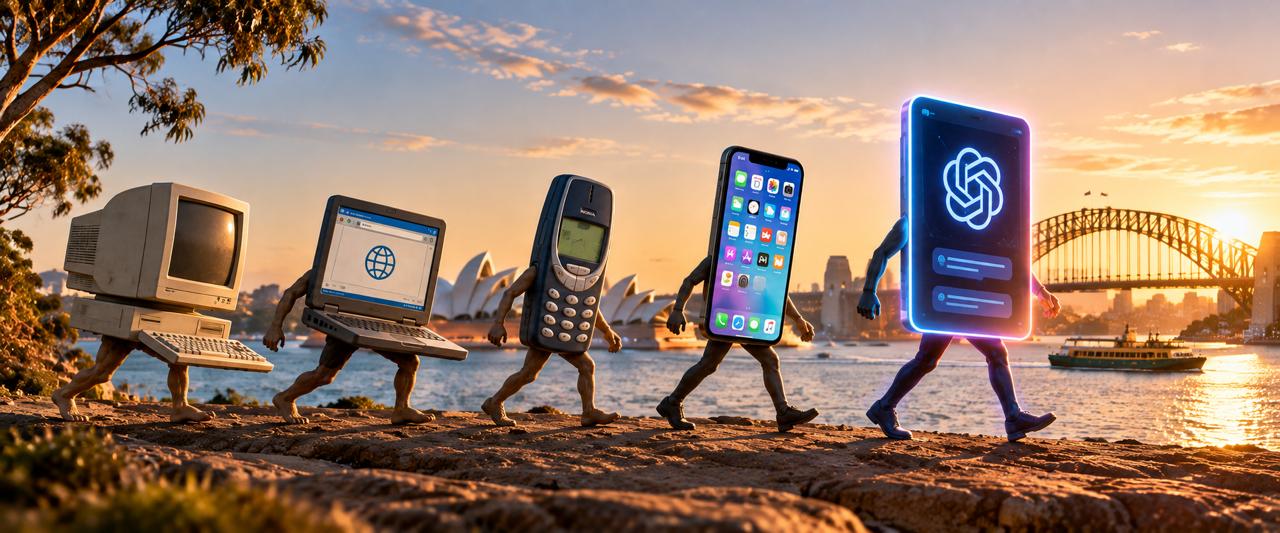
The printing press changed the way knowledge was shared. Electricity transformed homes and businesses. The internet changed how we communicate. Smartphones put the world's information into our pockets.
Each innovation disrupted the way people lived and worked. Each was met with scepticism, and each ultimately became part of everyday life.
Artificial Intelligence feels very much like the next chapter in that same story.
There will undoubtedly be jobs that disappear as AI becomes more capable. But if history is any guide, there will also be careers created that we simply can't imagine today. The challenge isn't trying to stop technological progress—it's making sure people are ready to adapt alongside it.
One of the very first things I learnt about computers was a phrase that every IT professional seemed to know.
Garbage in. Garbage out.
It didn't matter how expensive the computer was or how advanced the software appeared to be. If the information entered into the system was inaccurate, incomplete or poorly structured, the results were almost always disappointing. Computers simply processed what they were given.
Four decades later, I don't think that principle has changed at all.
We've replaced software commands with AI prompts, but the underlying lesson remains exactly the same. Ask vague questions and you'll usually receive vague answers. Provide incomplete information and you should expect incomplete results.
Despite all of AI's remarkable capabilities, the quality of the output still depends heavily on the quality of the human interaction behind it.
The technology has evolved dramatically.
The principle hasn't.
Technology has also taught us another important lesson.
Back in 1987, financial markets experienced what became known as Black Monday. There were many reasons behind the crash, but one factor that received enormous attention was the increasing use of computerised trading systems.
When markets began falling, automated programs accelerated selling at a speed that few people had anticipated. Computers weren't making intelligent decisions. They were simply carrying out the instructions that humans had programmed them to follow.
For many people, it became easy to blame the computers.
I don't think the computers were ever the real problem.
The real lesson was that technology will faithfully execute the instructions we give it, whether those instructions produce good outcomes or bad ones.
As Artificial Intelligence becomes more integrated into our daily lives, I think that lesson is just as relevant today as it was nearly forty years ago.
The music industry experienced a remarkably similar debate.
I can still remember when music created with computers was criticised for sounding artificial or somehow less authentic. Drum machines, synthesisers and digital production were often dismissed as replacing musicians rather than enhancing their creativity.
Looking back, I don't think the problem was ever the technology itself.
The real issue was that musicians, producers and engineers were still learning how to use these new tools creatively.
Today, almost every commercial recording relies on computers in some way, yet hardly anyone questions it. The debate disappeared not because computers changed, but because the people using them became better at using them.
I suspect Artificial Intelligence is following a remarkably similar path.
Perhaps that's why I don't see Artificial Intelligence as something completely different from every technological revolution that came before it.
To me, it's still a tool.
A remarkably powerful one, but a tool nonetheless.
It doesn't replace judgement.
It doesn't replace creativity.
It doesn't replace experience.
Most importantly, it doesn't replace critical thinking.
The people producing the best results with AI aren't necessarily those who know the most about technology. They're the people who understand the subject they're working on, know how to ask thoughtful questions and can recognise when an answer doesn't quite seem right.
In many ways, AI doesn't replace expertise.
It amplifies it.
As AI continues to evolve, I actually think we'll begin to appreciate human qualities even more.
Experience.
Judgement.
Creativity.
Ethics.
Common sense.
These aren't things that can simply be generated by typing a prompt.
Artificial Intelligence can help us analyse information, explore ideas and improve productivity. It can even challenge our thinking in ways we may not have considered.
But it still relies on people to ask the right questions and decide whether the answers make sense.
Perhaps that's the biggest lesson of all.
The more advanced technology becomes, the more valuable good human judgement becomes alongside it.
History has a funny way of repeating itself.
I've watched computers reshape workplaces.
I've watched the internet change the way we communicate.
I've watched smartphones become an extension of everyday life.
Now we're watching Artificial Intelligence begin another technological revolution.
Some jobs will undoubtedly disappear.
Many others will change.
Entirely new careers will emerge.
That's exactly what happened when computers first arrived.
Perhaps AI isn't rewriting history after all.
Perhaps it's simply reminding us that every generation believes its technological revolution is unlike anything that came before it.
Most of the time, history tells a different story.
Technology changes.
People adapt.
And one lesson seems to survive every technological revolution.
Technology has never replaced good thinking. It has simply rewarded those who know how to think well.