07 Oct 2026
12 October, 2026
Monday
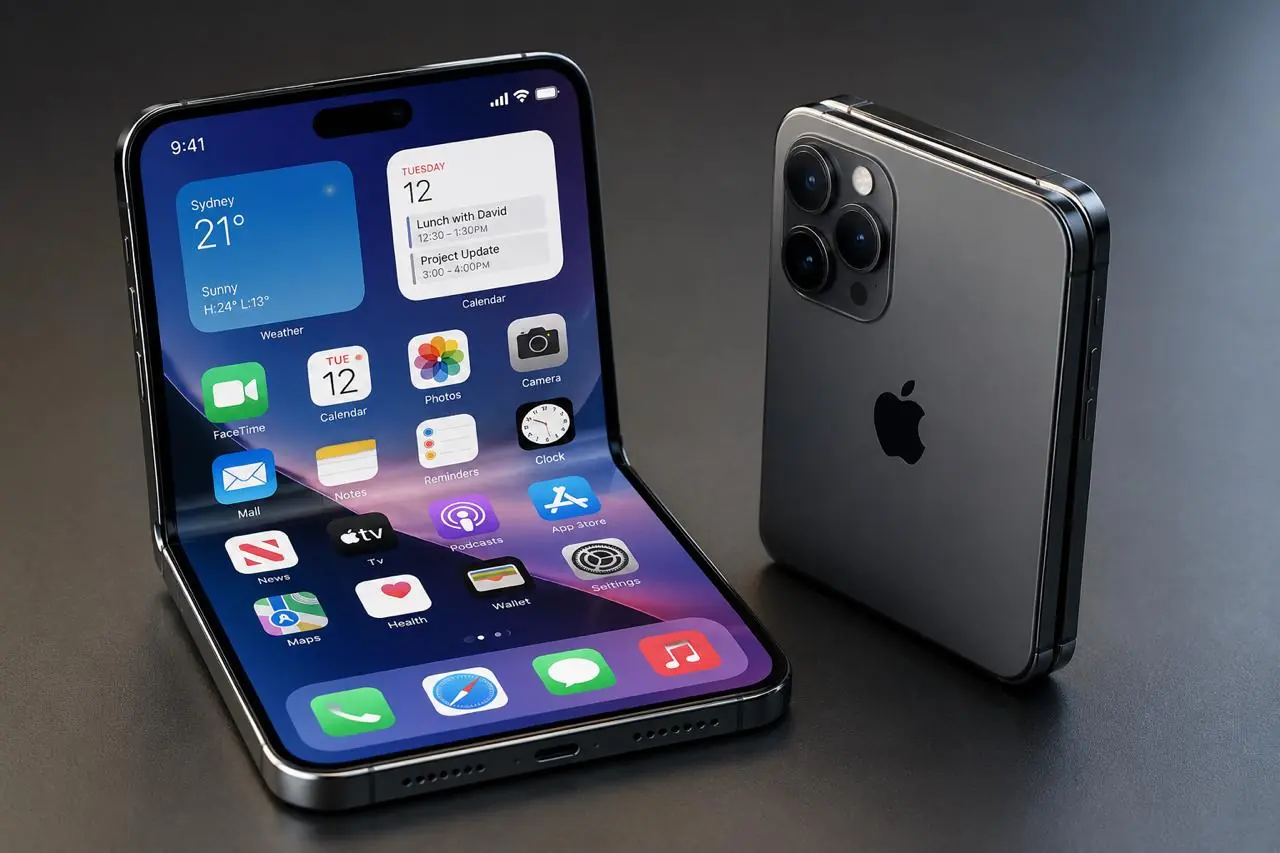
Apple is reportedly preparing to launch its first foldable iPhone, with speculation suggesting a price somewhere around AUD$2,000 to AUD$3,500. At the same time, the familiar iPhone Pro models are expected to receive the usual annual improvements, including faster processors, improved cameras and better battery efficiency.
The foldable iPhone immediately caught my attention because, for the first time in quite a while, Apple could be about to introduce an iPhone that actually feels different.
After nearly twenty years of the iPhone, it raises an interesting question.
Think back to the original iPhone.
When Steve Jobs introduced it in 2007, it wasn't simply a better mobile phone. It represented an entirely different way of thinking about what a phone could be. A large touchscreen replaced the physical keyboard, applications eventually transformed the device into something far beyond a telephone, and features that once required multiple separate devices gradually found their way into something we carried around in our pocket.
The years that followed brought an extraordinary period of innovation. App stores changed the way software was distributed. Cameras improved to the point where millions of people stopped carrying dedicated cameras. GPS navigation replaced the street directory sitting in the car. Fingerprint recognition was followed by facial recognition, while mobile payments increasingly allowed us to leave our wallets at home.
For a long time, a new smartphone could introduce something that genuinely changed the way we used technology.
Today, things feel very different.
The smartphone continues to improve every year, but when was the last time a new phone made you stop and think:
I didn't know a phone could do that.
Perhaps that's why Apple's expected foldable iPhone is so interesting.
And it made me wonder whether the problem isn't Apple, Samsung, Google or any particular manufacturer at all.
Has the smartphone simply become boring?
Today, the annual smartphone upgrade has become remarkably familiar.
We expect a faster processor, an improved camera, a brighter display and hopefully better battery life. The phone might become slightly thinner or lighter, storage capacities increase and manufacturers inevitably find new ways to demonstrate how much faster the latest processor is than the one it replaces.
None of these improvements are bad. When combined, they have given us extraordinarily capable devices that would have seemed almost impossible twenty years ago.
The problem is that incremental improvement isn't necessarily exciting.
Every year we're inevitably told that the latest model is the best smartphone the company has ever produced. Of course it is. We'd probably be considerably more surprised if a manufacturer proudly announced that this year's phone wasn't quite as good as the one it replaced.
The technology continues to improve, but the sense of discovery has largely disappeared.